$0.00
0

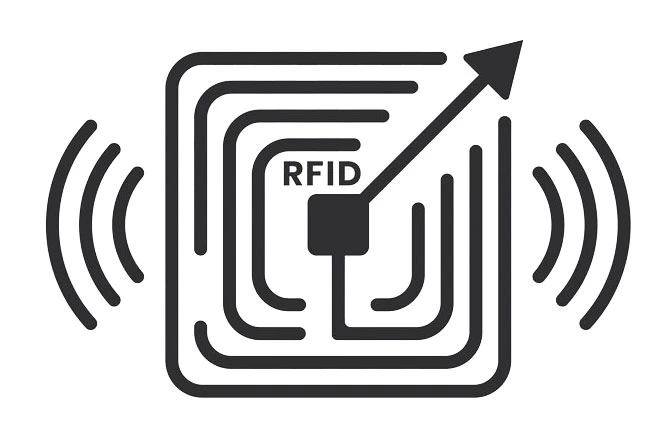
Here we will cover the basics of RFID frequency to make your decision-making process more manageable. Before deciding what type of RFID systems to review and test in an RFID solution, it is essential to determine the application. One reason this is so critical is the properties of the RFID labels themselves. RFID-enhanced labels have specific properties based on the type of tags and the frequency on which they operate. We will review the frequencies and some of the behavioral properties of those tags in this post. But first, let’s talk briefly about what the term frequency means.

What does frequency mean?

When referring to operating frequency, we generally refer to it in hertz (usually kilohertz or megahertz). A hertz is the standard measurement of a wave cycle (radio waves in this case). Imagine an ocean wave with a peak and a trough. A hertz measures a wave cycle by beginning with the midpoint from where the wave started. The cycle continues to the peak, down through the trough, and back up to the midpoint.

Once the wave goes through the peak, trough, and hits its midpoint, it has completed a cycle. The frequency is the number of cycles a wave completes in a single second. A wave that completes one cycle in one second would have one hertz. So, a high-frequency tag with an operating frequency of 13.56 MHz (Megahertz) radiates a wave that cycles 13,560,000 times per second.

High frequency is only one of the three frequency levels, along with low frequency and ultra-high frequency. So, now that we know what frequency means let’s jump into the definitions of each type and how they are typically applied.

Low-Frequency tags

Low Frequency (LF) tags generally operate at 125–134 kilohertz, meaning they usually have slower data transfer rates than their high-frequency or ultra-high frequency counterparts.

In addition, the frequency platform requires that the object is close to the reader (generally a few centimeters to inches) and not quickly moving to transmit the data stored on the tag. The desire for faster data transfer and convenient scanning has led to a decline in the use of low-frequency RFID.

However, this type of tag has one significant benefit. RFID opaque materials such as water or metals do not deter low-frequency tags. Due to the ability to transmit through otherwise RFID opaque materials, this product category can be a good fit when the tagged object has a high water content or requires close interaction with metal. The ability to penetrate liquids makes LF tags a great fit to identify animals or fruit. Applications under this umbrella may also include Access Control systems.

High-Frequency tags

High Frequency (HF) tags operate at 13.56 megahertz. They are essentially the ‘Swiss army knife of the RFID world. They have data transfer rates acceptable for many uses, a wide range of storing capacities and read distances ranging from millimeters to meters.

Tags in this category can still operate on objects exposed to water and are often a good fit for tagging bottles or vials containing liquids. There is almost an infinite amount of tag size and memory combinations available to fit the needs of virtually any application. A protocol within HF called near-field communication (NFC) allows you to communicate with the tags using a smartphone.

Various real-world applications can leverage these benefits. From reagent tracking to mobile payment, the possibilities seem endless. This type of tag’s ability to interact with smartphones makes its category increasingly popular, with marketers attempting to tie digital interactions with the physical world.

Ultra-High Frequency (UHF) tags

The majority of UHF systems operate between 860 and 960 megahertz. The distances for UHF tags are usually measured in feet and meters. While the tags are an excellent fit for objects that require fast identification from a distance, the tags are significantly impacted by liquids.

Because of the distance, lower cost, and quick transfer rates that come with the UHF platform, this technology has become popular for industrial applications and organizations looking for logistical improvements.

However, warehouses and labs aren’t the only places you’ll find UHF. UHF has found its way into the world of sporting events, often used for race timing and keeping track of tickets for expensive sporting events.

RFID Frequencies: Low, High, and Ultra High; What They are and Why it Matters

Here we will cover the basics of RFID frequency to make your decision-making process more manageable. Before deciding what type of RFID systems to review and test in an RFID solution, it is essential to determine the application. One reason this is so critical is the properties of the RFID labels themselves. RFID-enhanced labels have specific properties based on the type of tags and the frequency on which they operate. We will review the frequencies and some of the behavioral properties of those tags in this post. But first, let’s talk briefly about what the term frequency means.

What does frequency mean?

When referring to operating frequency, we generally refer to it in hertz (usually kilohertz or megahertz). A hertz is the standard measurement of a wave cycle (radio waves in this case). Imagine an ocean wave with a peak and a trough. A hertz measures a wave cycle by beginning with the midpoint from where the wave started. The cycle continues to the peak, down through the trough, and back up to the midpoint.

Once the wave goes through the peak, trough, and hits its midpoint, it has completed a cycle. The frequency is the number of cycles a wave completes in a single second. A wave that completes one cycle in one second would have one hertz. So, a high-frequency tag with an operating frequency of 13.56 MHz (Megahertz) radiates a wave that cycles 13,560,000 times per second.

High frequency is only one of the three frequency levels, along with low frequency and ultra-high frequency. So, now that we know what frequency means let’s jump into the definitions of each type and how they are typically applied.

Low-Frequency tags

Low Frequency (LF) tags generally operate at 125–134 kilohertz, meaning they usually have slower data transfer rates than their high-frequency or ultra-high frequency counterparts.

In addition, the frequency platform requires that the object is close to the reader (generally a few centimeters to inches) and not quickly moving to transmit the data stored on the tag. The desire for faster data transfer and convenient scanning has led to a decline in the use of low-frequency RFID.

However, this type of tag has one significant benefit. RFID opaque materials such as water or metals do not deter low-frequency tags. Due to the ability to transmit through otherwise RFID opaque materials, this product category can be a good fit when the tagged object has a high water content or requires close interaction with metal. The ability to penetrate liquids makes LF tags a great fit to identify animals or fruit. Applications under this umbrella may also include Access Control systems.

High-Frequency tags

High Frequency (HF) tags operate at 13.56 megahertz. They are essentially the ‘Swiss army knife of the RFID world. They have data transfer rates acceptable for many uses, a wide range of storing capacities and read distances ranging from millimeters to meters.

Tags in this category can still operate on objects exposed to water and are often a good fit for tagging bottles or vials containing liquids. There is almost an infinite amount of tag size and memory combinations available to fit the needs of virtually any application. A protocol within HF called near-field communication (NFC) allows you to communicate with the tags using a smartphone.

Various real-world applications can leverage these benefits. From reagent tracking to mobile payment, the possibilities seem endless. This type of tag’s ability to interact with smartphones makes its category increasingly popular, with marketers attempting to tie digital interactions with the physical world.

Ultra-High Frequency (UHF) tags

The majority of UHF systems operate between 860 and 960 megahertz. The distances for UHF tags are usually measured in feet and meters. While the tags are an excellent fit for objects that require fast identification from a distance, the tags are significantly impacted by liquids.

Because of the distance, lower cost, and quick transfer rates that come with the UHF platform, this technology has become popular for industrial applications and organizations looking for logistical improvements.

However, warehouses and labs aren’t the only places you’ll find UHF. UHF has found its way into the world of sporting events, often used for race timing and keeping track of tickets for expensive sporting events.

0
    0
    Your Cart
    Your cart is emptyReturn to Shop

    Print blood bag labels at collection points.

    Print blood bag labels as needed using live data from blood bank systems. Generate labels during collection, component processing, or labeling steps, with donation identification numbers, product codes, and variable data applied at the point of use. This approach supports workflows where blood data updates in real time and requires immediate, accurate identification.

    A simple setup can integrate real-time labeling directly into your workflow.

    Set up a complete labeling workflow using the right materials and equipment to print and apply labels directly during blood collection, component processing, and blood bank handling workflows.

    durable labels

    Start with blank label stock engineered for flexible PVC blood bags.

    label printers

    Print high-resolution barcodes and text for complex blood label layouts.

    compatible ribbons

    Use included thermal transfer ribbons to produce durable barcode labels.

    label software

    Integrate barcode software to generate ISBT 128 labels and DIN data.

    Print-on-demand labeling fits blood banks and collection centers that generate or update donation data in real time. This includes blood collection sites, processing labs, and transfusion services where blood bags are labeled on demand, and workflows require immediate, accurate identification without relying on pre-printed labels.

    Control blood bag labeling with pre-printed formats.

    Get blood bag labels professionally printed with controlled data, advanced converting, and durable materials. Eliminate in-house printing while ensuring every label meets performance requirements for blood bank use, including handling, cold storage, and transfusion.

    Guarantee no duplicates with professionally printed blood bag labels.

    Pre-printed labeling combines controlled printing, advanced converting, and durable materials to deliver consistent, ready-to-use blood bag labels. This approach removes variability from in-house printing and ensures every label meets requirements for DIN accuracy, barcode performance, and reliable identification across blood bank workflows.

    consistency at scale

    Receive pre-printed labels with guaranteed unique DIN sequences, controlled serialization, and validated data across batches and production runs.

    accurate din formats

    Maintain consistent DIN formats to ensure accurate identification across blood bags, segments, and associated components.

    durable finsihing

    Use engineered label constructions designed to resist edge lift, moisture, and routine handling, helping maintain adhesion and readability throughout blood collection.

    Pre-printed labeling fits blood banks and collection centers that manage high volumes of donations and require controlled, repeatable identification. This includes blood collection sites, processing facilities, and transfusion services where standardized labeling, consistent DIN assignment, and stable data support efficient, validated workflows without frequent changes.

    Support accurate workflows with real-time labeling.

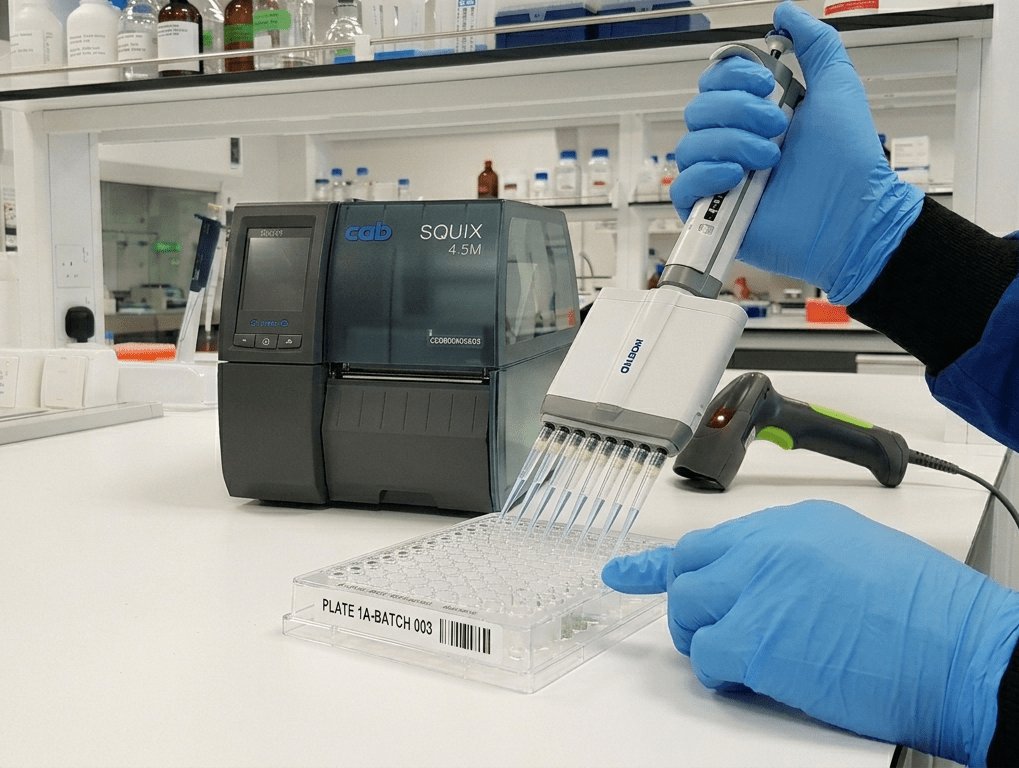
    In laboratory environments, data often isn’t final until the last moment—at the bench, at the instrument, or during sample handling. Printing labels on demand helps ensure each tube or vial reflects the most accurate information, while fitting naturally into the way your work actually happens.

    Support accurate workflows with real-time labeling.

    In laboratory environments, data often isn’t final until the last moment—at the bench, at the instrument, or during sample handling. Printing labels on demand helps ensure each tube or vial reflects the most accurate information, while fitting naturally into the way your work actually happens.

    A simple setup can integrate real-time labeling directly into your workflow.

    In laboratory environments, data often isn’t final until the last moment—at the bench, at the instrument, or during sample handling. Printing labels on demand helps ensure each tube or vial reflects the most accurate information, while fitting naturally into the way your work actually happens.

    compatible ribbons

    Compatible resin ribbons ensuring clear, durable print for barcodes and text

    compatible ribbons

    Compatible resin ribbons ensuring clear, durable print for barcodes and text

    In laboratory environments, data often isn’t final until the last moment—at the bench, at the instrument, or during sample handling. Printing labels on demand helps ensure each tube or vial reflects the most accurate information, while fitting naturally into the way your work actually happens.

    Support accurate workflows with real-time labeling.

    In laboratory environments, data often isn’t final until the last moment—at the bench, at the instrument, or during sample handling. Printing labels on demand helps ensure each tube or vial reflects the most accurate information, while fitting naturally into the way your work actually happens.

    A simple setup can integrate real-time labeling directly into your workflow.

    compatible ribbons

    Compatible resin ribbons ensuring clear, durable print for barcodes and text

    compatible ribbons

    Compatible resin ribbons ensuring clear, durable print for barcodes and text

    compatible ribbons

    Compatible resin ribbons ensuring clear, durable print for barcodes and text

    compatible ribbons

    Compatible resin ribbons ensuring clear, durable print for barcodes and text

    In laboratory environments, data often isn’t final until the last moment—at the bench, at the instrument, or during sample handling. Printing labels on demand helps ensure each tube or vial reflects the most accurate information, while fitting naturally into the way your work actually happens.

    Support accurate workflows with real-time labeling.

    In laboratory environments, data often isn’t final until the last moment—at the bench, at the instrument, or during sample handling. Printing labels on demand helps ensure each tube or vial reflects the most accurate information, while fitting naturally into the way your work actually happens.

    A simple setup can integrate real-time labeling directly into your workflow.

    In laboratory environments, data often isn’t final until the last moment—at the bench, at the instrument, or during sample handling. Printing labels on demand helps ensure each tube or vial reflects the most accurate information, while fitting naturally into the way your work actually happens.

    durable labels

    Durable labels that stay attached through handling, storage, or cryogenic conditions

    compatible ribbons

    Compatible resin ribbons ensuring clear, durable print for barcodes and text

    reliable printer

    Compact, consistent, durable thermal transfer printing at the point of use

    label software

    Label management software to format labels and connect to sample data or LIMS

    In laboratory environments, data often isn’t final until the last moment—at the bench, at the instrument, or during sample handling. Printing labels on demand helps ensure each tube or vial reflects the most accurate information, while fitting naturally into the way your work actually happens.

    Request a Sample

    Request a label product sample to get started.

    "*" indicates required fields

    This field is for validation purposes and should be left unchanged.

    Request a quote

    Take advantage of our volume discounts for bulk orders. Reach out to us for a personalized quote tailored to your needs.

    "*" indicates required fields

    This field is for validation purposes and should be left unchanged.